
Are You Using Range of Motion Assessments in Your Massage Practice?
By spending even two minutes before your massage treatment, you might be able to save time, conserve energy, and provide a more lasting treatment for your patient. And your patients will likely be back sooner the next time they experience pain.
We all learned what I like to call A.P.R. assessments (Active, Passive, and Resisted Range of Motion) but the question is: are we consistently using these skills with our patients?
If we are not using ROM assessments as tools in our practice, we are missing valuable clinical information and potentially doing a disservice to our patients and our profession.
Range of motion testing is more than just a topic learned during massage training. It is a simple, effective assessment tool that helps us establish a baseline, identify limitations, guide our treatment choices, prescribe stretching and strengthening exercises, and demonstrate changes after treatment.
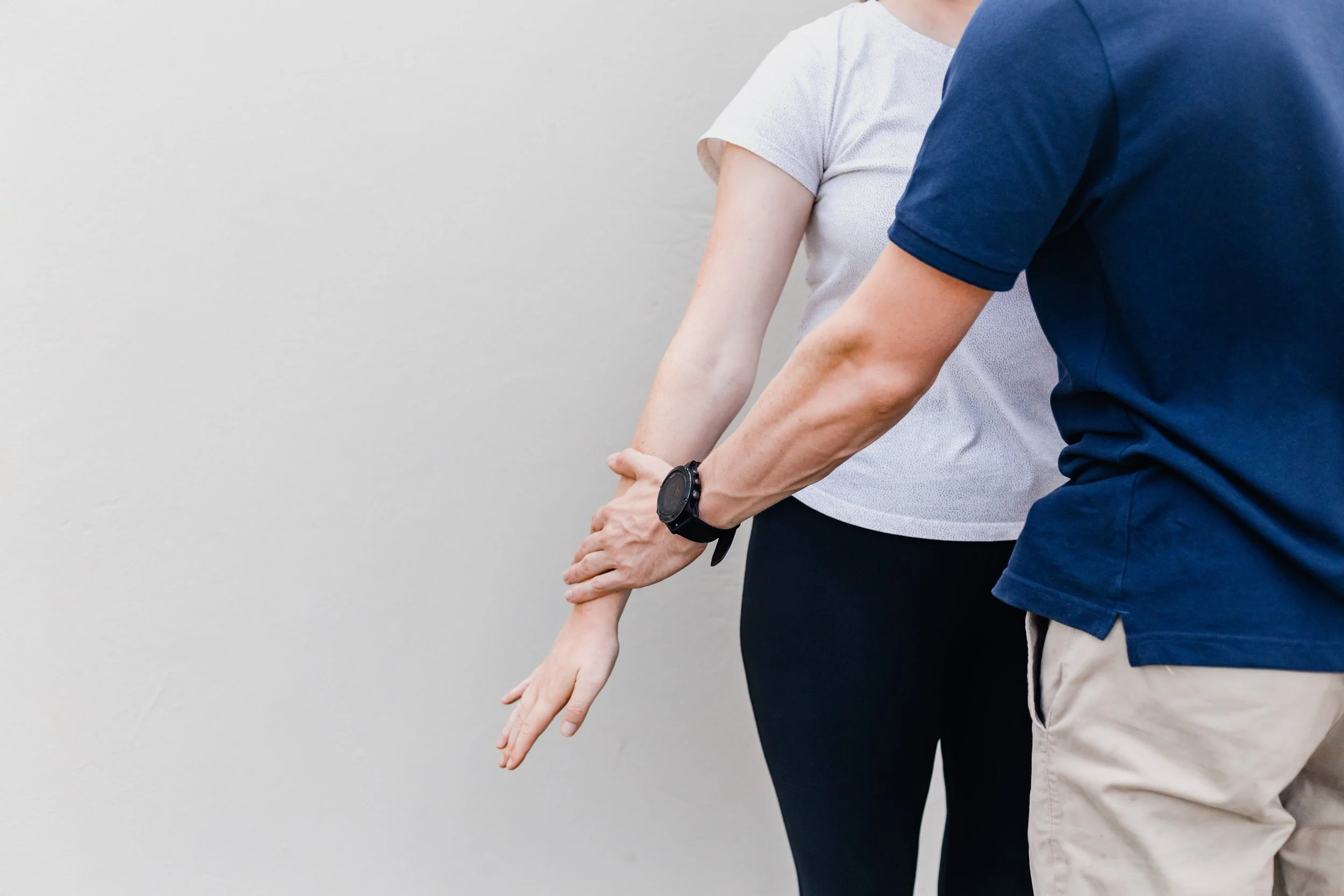
What is Active Range of Motion (AROM) Testing?
Active ROM should be part of every assessment, not just your initial assessment. It should be used each time your patient comes in for a massage. It provides us with a baseline of how a patient moves independently before we apply any massage treatment or modalities.
For example, if a patient comes in complaining of neck pain, I will typically assess cervical rotation and lateral flexion. I may also include shoulder movements or thoracic/lumbar movements depending on the patient's presentation.
You might be wondering, "Do we have to assess every range of motion?" Of course not. I often choose one or two movements for two or three joints. This allows me to be quick and efficient while still gathering valuable information.
Active ROM helps answer important questions such as:
Is there a restriction in movement? (Is it related to hypertonicity, weakness, or another factor?)
Is there pain with movement?
Is the limitation related to mobility, strength, or another contributing factor?
Has the patient's movement improved after treatment?
Even a quick ROM assessment can provide valuable information.
When to Use Passive Range of Motion (PROM)
Passive ROM is useful when you notice something more concerning during active ROM testing, especially with chronic or persistent issues.
If I suspect a mobility restriction, joint capsule involvement, or soft tissue limitation, passive testing allows me to assess how much movement is available when the muscles are relaxed.
For example, if a patient has decreased range of motion during active shoulder flexion, I need to determine whether the limitation is due to weakness of the shoulder flexors (deltoid, biceps, upper fibers of the pectoralis major) or whether there is hypertonicity or shortening of the antagonists, such as the latissimus dorsi.
Once I test passive ROM, I can determine if the limitation is, in fact, related to hypertonic lats or another restriction.
When to Use Resisted Range of Motion (RROM)
Resisted ROM is especially useful when there is pain, injury, or muscle weakness.
If a patient presents with an acute injury, resisted testing can be performed after active ROM to help determine whether muscle or tendon involvement may be contributing to their symptoms.
For example, if someone is limping slightly when they come into your clinic and reports pain during active hip flexion, resisted hip flexion can provide the massage therapist with information regarding the overall strength of the hip flexors.
In this case, the hip flexors may be weak due to an injury or lack of movement. The hip flexors may require massage therapy, but they will also require appropriate strengthening exercises.
Why ROM Assessments Matter for RMTs

One of the biggest benefits of ROM testing is that it allows us to measure change and track progress with our patients.
I have had many patients comment on how much they appreciate that I actually assess their movement before treatment. Many people have experienced massage where the therapist immediately starts working without first understanding how their body is moving.
When we assess and then reassess after a massage treatment, we can often demonstrate improvements in mobility, decreased discomfort, or changes in movement quality. This not only provides valuable clinical feedback but also helps patients understand the effectiveness of their treatment.
The look on their face when they see the improvement often guarantees that they will come back the next time they are not moving well.
ROM assessments are simple, take only a few minutes, and can greatly improve the quality of care we provide. The more consistently we use them, the more valuable they become for both our patients and our profession.

Want to learn more?
Earn your continuing education credits with Chad Friel’s course:
